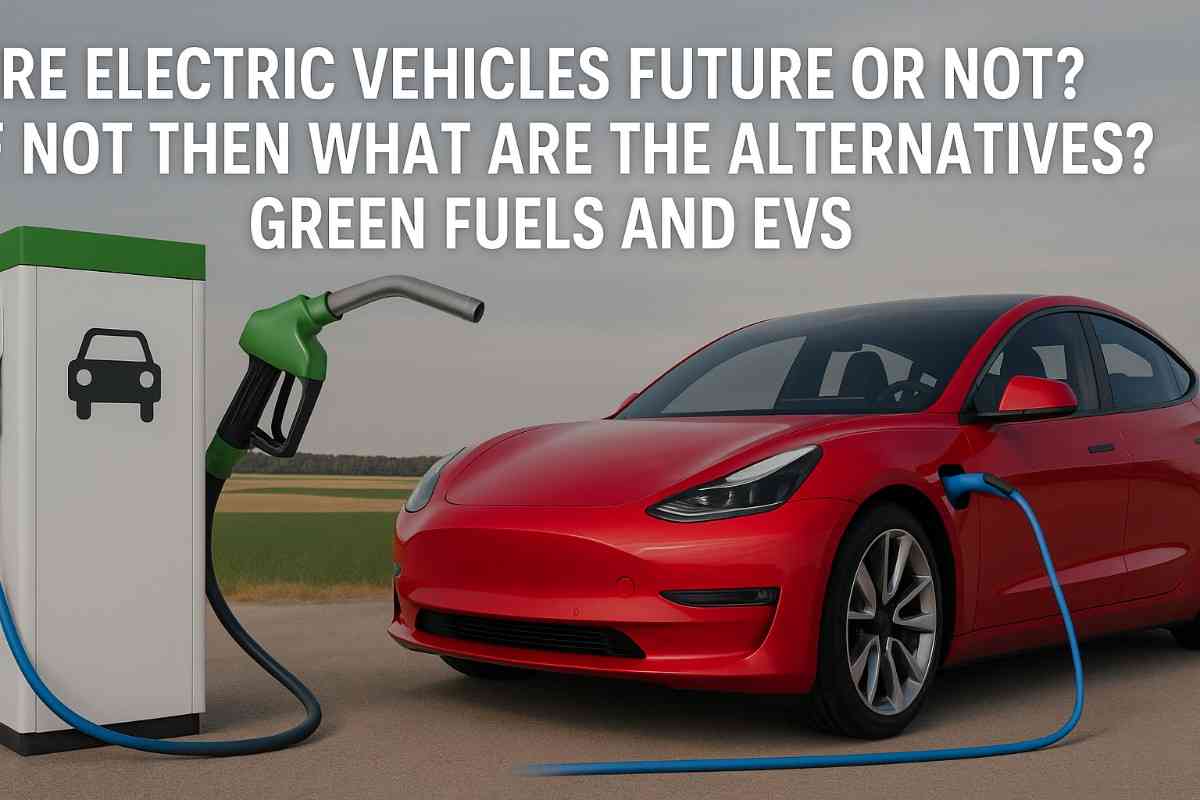
Are Electric Vehicles Future or Not? If Not Then What Are The Alternatives? Green Fuels and EVs
Electric vehicles future concerns are increasing, even though EVs represent a cleaner and sustainable mode of transportation. However, the limitations of EVs and the rise of green fuels are forcing us to rethink whether electric vehicles are truly the future of mobility.
To see how everyday lifestyle choices can support the electric vehicles future and reduce emissions, read our guide on how to fight climate change daily with simple actions.
Electric Vehicles Future – Key Limitations
1. Limited Range Challenges
The range of electric vehicles is one of their main drawbacks. Although battery technology developments have increased the range of EVs, they still can’t match the convenience provided by petrol or diesel vehicles. Long-distance travel can be difficult because refuelling infrastructure is less common than recharging facilities.
2. Charging Infrastructure Problems
The adoption of EVs still faces a considerable barrier due to the accessibility and availability of charging infrastructure. For EV owners, particularly those without a private charging setup at home, many areas still lack a reliable charging network.
3. Slow Charging Times
Compared to refuelling a conventional vehicle with petrol or diesel, charging an electric vehicle takes far longer. Fast chargers charge quicker, but they’re less common, so drivers often wait longer.
4. Environmental Impact of Battery Production
Even though EVs have no tailpipe emissions, they still have a significant environmental impact. Mining lithium-ion batteries uses heavy resources and causes habitat destruction and pollution.
5. Power Source Concerns
The source of power generation has a significant impact on the environmental advantages of electric vehicles. Emission reduction is limited where electricity still comes mainly from coal or fossil fuels.

Green Fuel Alternatives to Electric Vehicles
We need to look beyond electric power and take into account different ways to meet the limits of EVs and further reduce the carbon footprint of transportation. Green fuels, also referred to as sustainable or renewable fuels, present a possible route to a future that is more environmentally friendly and sustainable.
1. Hydrogen as a Clean Fuel
Hydrogen is a fuel that can be created cleanly and effectively using renewable energy sources, such as solar or wind power for electrolysis. The advantages of hydrogen fuel cell vehicles (FCVs) include quick refuelling, extended ranges, and no tailpipe emissions.
2. Biofuels for Sustainable Transport
Biofuels are renewable and have the potential to be carbon-neutral because they are made from organic matter like plants, algae, or trash. Common biofuels that can replace petrol and diesel, respectively, are ethanol and biodiesel.
3. Synthetic (e-Fuels) for Future Mobility
Carbon dioxide (CO2) and water are transformed into liquid or gaseous fuels using renewable electricity to create synthetic fuels, sometimes referred to as e-fuels or power-to-liquids (PtL). These fuels are compatible with current internal combustion engine vehicles, which could make the switchover for the automotive industry simpler.
4. Ammonia Fuel Potential
Another viable option for green fuel is ammonia. It can be created from renewable energy sources and used in internal combustion engines or fuel cells as a carbon-free fuel.
Advantages of Green Fuels Over EVs
1. Compatibility With Existing Fuel Stations
The ability of green fuels to work with current infrastructure is one of its main advantages. Green fuels can be delivered and used within the current refuelling infrastructure, unlike EVs which need new charging stations and grids.
2. Extended Vehicle Range Possibility
Synthetic and hydrogen fuels, among other green fuels, have the potential to extend driving distances to levels comparable to those of conventional vehicles. Because of this, they are more suited for long-distance trips and demanding tasks like hauling goods.
3. Faster Refuelling Times
Similar to how long it takes to refill an automobile with petrol or diesel, hydrogen and synthetic fuels can be refuelled quickly. This convenience allays the “range anxiety” sometimes connected to electric vehicles.
If you want to explore other ways to cut environmental impact beyond vehicles, check out our article on green waste management technologies for a better future.
4. Reduced Environmental Emissions
In comparison to fossil fuels, green fuels have a reduced overall environmental impact, especially when produced utilising renewable energy sources. They can drastically lower reliance on limited fossil fuel supplies and greenhouse gas emissions.
According to the U.S. Department of Energy’s overview of electric vehicle benefits, EVs can improve fuel economy, lower running costs, and significantly reduce emissions compared with conventional petrol or diesel cars.

Conclusion – Which Fuel Has the Real Future?
Electric cars have undoubtedly transformed the automotive industry and taken us one step closer to a cleaner future, but they might not be the only way to fight pollution and lessen our carbon footprint. The drawbacks of EVs, such as their limited range, lack of infrastructure for charging, and the negative environmental effects of producing batteries, underline the need to investigate more green fuels.
Hydrogen, biofuels, synthetic fuels, and ammonia are some examples of green fuels that have various benefits. These benefits include compatibility with current infrastructure, increased range, quick refuelling, and less environmental effect. These fuels offer the potential to meet our transportation demands in a more comprehensive and sustainable way, lowering pollution and counteracting the consequences of climate change.
In order to save the Earth from pollution and create a more sustainable and ecologically friendly transportation system, we must take a diverse approach that takes into account both electric vehicles and green fuels.
Our Social Accounts


