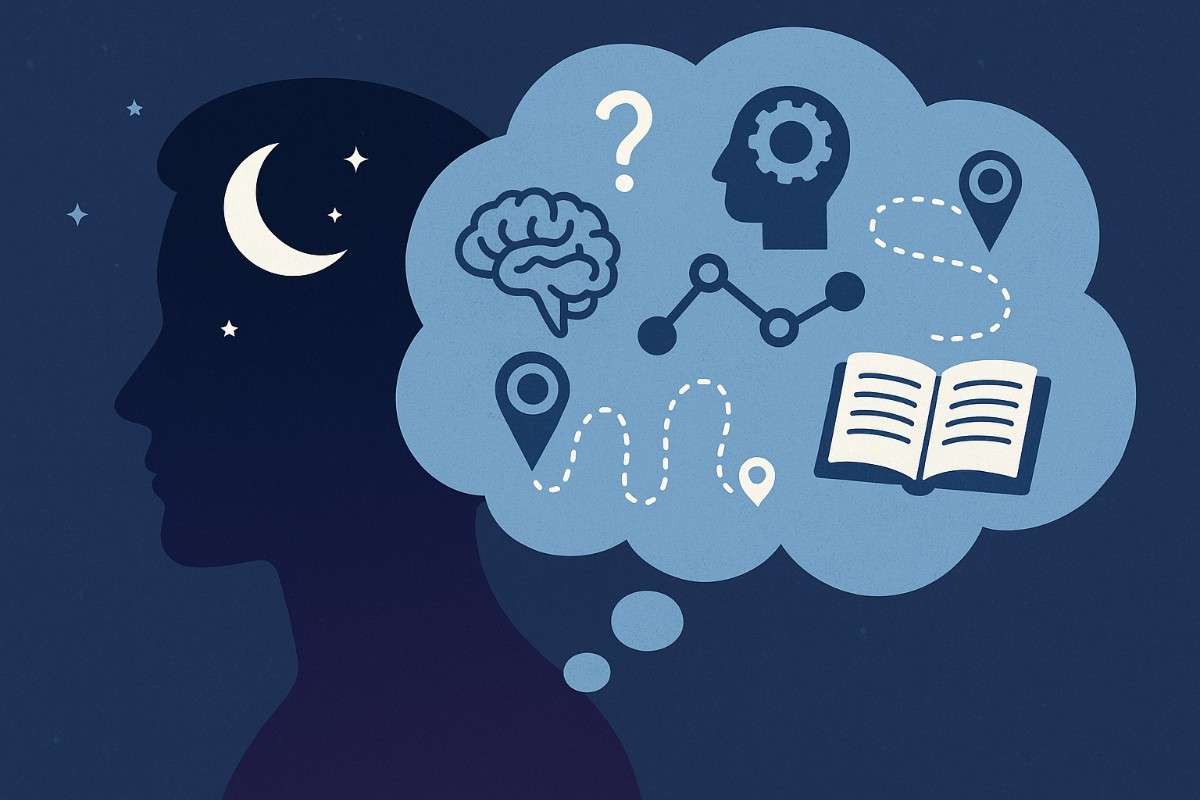
The reason why we dream. Some interesting facts and theories.
In the third millennium BCE, Mesopotamian kings recorded and interpreted their dreams on wax tablets. A thousand years later, Ancient Egyptians wrote a dream book listing over a hundred common dreams and their meanings. And in the years since, we haven’t paused in our quest to understand why we dream. So after a great deal of scientific research, technological advancement, and persistence, we still don’t have any definite answers, but we have some interesting theories.
Dreams and Wish Fulfillment: Freud’s Interpretation
In the early 1900s, Sigmund Freud proposed that while all of our dreams, including our nightmares, are a collection of images from our daily conscious lives, they also have symbolic meanings, which relate to the fulfillment of our subconscious wishes. Freud believed our remembered dreams symbolically show our unconscious thoughts, urges, and desires. Freud believed that by analyzing those remembered elements, the unconscious content would be revealed to our conscious mind, and psychological issues stemming from its repression could be addressed and resolved.
Dreams and Memory: Why the Brain Remembers
To increase performance on certain mental tasks, sleep is good, but dreaming while sleeping is better. In 2010, researchers found people performed better on a 3-D maze after dreaming about it before their second attempt. In fact, they were up to ten times better at it than those who only thought of the maze while awake between attempts, and those who napped but did not dream about the maze. Researchers theorize that certain memory processes can happen only when we are asleep, and our dreams are a signal that these processes are taking place.
To understand how dream-generation ties into sleep cycles, read our detailed explanation of the different stages of sleep and brain activity.

Dreams and Forgetting: Clearing Mental Clutter
There are about 10,000 trillion neural connections within the architecture of your brain. They are created by everything you think and everything you do. A 1983 neurobiological theory of dreaming called reverse learning, holds that while dreaming REM sleep cycles, your neocortex reviews these neural connections and dumps the unnecessary ones. Without this unlearning process, your brain would fill with useless connections that disrupt clear thinking.
Dreams and Brain Activity: Keeping the Mind Active
The continual activation theory says dreams help your brain consolidate long-term memories. When external input drops during sleep, the brain generates stored memories, which appear as thoughts and feelings in dreams. In simple terms, dreams may act like a brain screen saver to prevent shutdown.
Sleep disruptions such as snoring or sleep-apnoea can impact the brain’s ability to engage in proper dreaming cycles and neural cleanup.
Dreams as Rehearsal: Preparing for Real-Life Situations
Dangerous dream scenarios are common, and the instinct-rehearsal theory says their content serves an important purpose. Anxiety-filled dreams, like being chased or attacked, help you practice and sharpen fight-or-flight instincts. But it doesn’t always have to be unpleasant. Even dreams about an attractive person may give your instincts subtle practice.

Dreams and Healing: Processing Emotional Trauma
Stress chemicals drop during REM sleep, even in traumatic dreams, which may help the mind process painful experiences. Dreaming of trauma with less stress may help you see it more clearly and process it better. People with mood disorders or PTSD often struggle to sleep, and some scientists think reduced dreaming may worsen their condition.
Dreams and Problem Solving: Creative Thinking in Sleep
Freed from logic and reality, dreams let your mind create scenarios that help you solve problems. John Steinbeck called it the committee of sleep, and research has demonstrated the effectiveness of dreaming on problem solving. Chemist August Kekulé discovered benzene’s structure through a dream, proving that sleeping on problems can help.
And those are just a few of the more prominent theories. As technology increases our capability for understanding the brain, it’s possible that one day we will discover the definitive reason for them. But until that time arrives, we’ll just have to keep on dreaming. For a scientifically-reviewed overview of why we dream and what dreams mean, see this in-depth guide from the Sleep Foundation.
Our Social Accounts


An impressive share, I just given this onto a colleague who was doing just a little evaluation on this. And he in truth purchased me breakfast as a result of I found it for him.. smile. So let me reword that: Thnx for the treat! But yeah Thnkx for spending the time to discuss this, I feel strongly about it and love reading extra on this topic. If possible, as you turn into expertise, would you thoughts updating your blog with extra particulars? It’s highly helpful for me. Huge thumb up for this weblog publish!