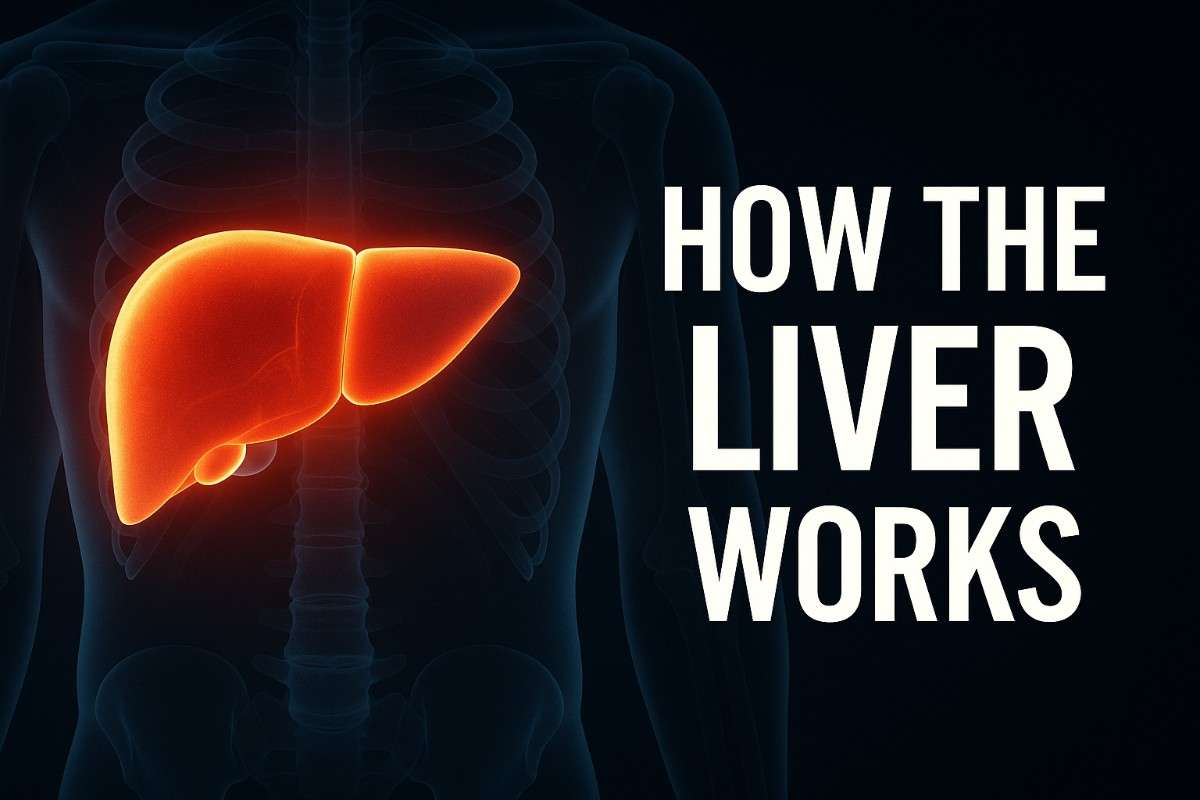
How does the heaviest organ of your body work: Liver?
There’s a factory inside you that weighs about 1.4 kilograms and runs for 24 hours a day. This is your liver, the heaviest organ in your body, and one of the most crucial. This organ acts as a storehouse, a manufacturing hub, and a processing plant. Each function has vital subtasks, and without the liver our bodies would stop working. So, this article we will find how the liver works.
How the Liver Works to Filter and Clean Your Blood
One major function is filtering blood, which comes from two sources. The hepatic artery brings blood from the heart, and the portal vein brings it from the intestine. This dual flow fills the liver with nutrients, which it then sorts, processes, and stores using thousands of lobules. Both blood flows also deliver the oxygen that the liver needs to function.

How the Liver Processes Nutrients and Stores Energy
Blood from the intestine carries carbohydrates, fats, vitamins, and other dissolved nutrients from your food. These must be processed in different ways. In the case of carbohydrates, the liver breaks them down and converts them into sugars for the body to use it as energy when the filtered blood is sent back out. Since diet influences how the liver processes nutrients, you may also want to read our detailed discussion of gluten and whether you need to follow a gluten-free diet.
Sometimes the body has leftovers of nutrients that it doesn’t immediately require. When that happens, the liver holds some back, and stacks them in its storage facility. This facility works like a pantry for future cases when the body might be in need of nutrients. To dive deeper into nutrient-rich foods that support organs like the liver, check out our article on super foods and their versatile benefits.
How the Liver Handles Toxins and Protects Your Body
But the blood flowing into the liver isn’t always full of good things. It also contains toxins and byproducts that the body can’t use. And the liver monitors these strictly. When it sorts a useless or toxic substance, it either converts it into a product that can’t hurt the body or isolate it and whisks it away, channeling it through the kidneys and intestine to be excreted.
Of course, we wouldn’t consider the liver a factory if it doesn’t manufacture things. The organ makes everything from various blood plasma proteins that transfer fatty acids and help form blood clots, to the cholesterol that helps the body create hormones. It also makes vitamin D and substances that help digestion.

How the Liver Produces Bile and Supports Digestion
But one of its most vital products is bile. Like an eco-friendly treatment plant, the liver uses cells called hepatocytes to convert toxic waste products into this bitter greenish liquid. As it produced, bile is funneled into a small container below the liver, called the gallbladder, before being trickled into the intestine to break down fats, destroy microbes, and neutralize extra stomach acid. Bile also helps carry other toxins and byproducts from the liver out of the body.
So as you can see the liver is an extremely efficient industrial site, performing multiple tasks that support each other. But such a complex system needs to be kept running smoothly by keeping it healthy and not overloading it with more toxins than it can handle. This is one factory we simply can’t afford to shut down. For a medically reviewed overview of liver anatomy, functions and related diseases, you can refer to this comprehensive guide by Healthline.
Our Social Accounts


