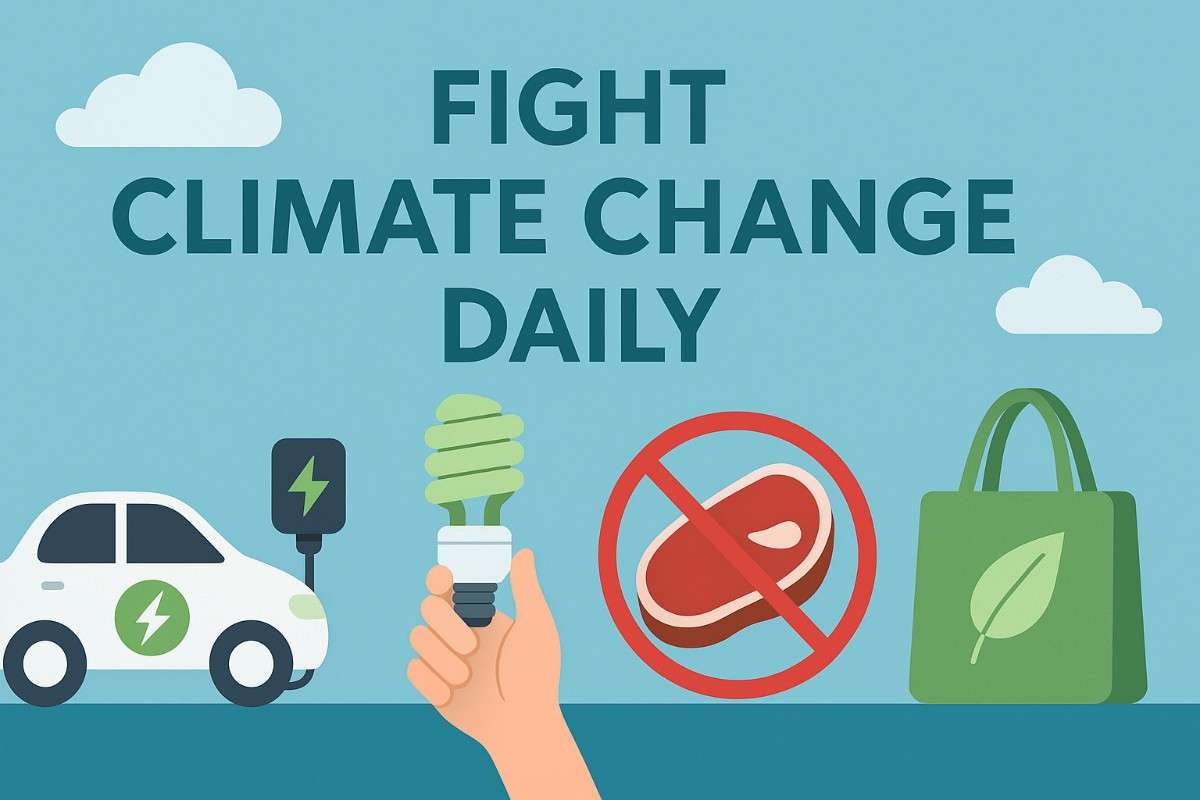
How small changes can deal with rapid climate change and what you can actually do?
Never before in human history have we been richer, more advanced or powerful. And yet we feel overwhelmed in the face of rapid climate change. It seems simple on the surface. Greenhouse gases trap energy from the Sun and transfer it to our atmosphere. This leads to warmer winters, harsher summers. Dry places become drier and wet places wetter. Countless ecosystems will die while the rising oceans swallow coasts and the cities we build on them. The good news is that we can fight climate change daily with small, practical actions that add up to real impact. For a deeper scientific understanding, refer to the Intergovernmental Panel on Climate Change (IPCC).
So why don’t we just like… prevent all of that?
Well it’s complicated. The public debates about stopping rapid climate change often focuses an a few key features, like coal plants, cars or burping cows. And so the solutions are often simplistic-rows of solar panels, biking to work, something something sustainability. And a huge talking point is personal responsibility. Understanding the importance of individual action can help you see how your small choices contribute to larger climate goals.
How you should change your lifestyle to prevent rapid climate change, which we will find out together in this article.
This is one of those articles where we want to encourage you to read to the end, because to discuss real doable solutions, we first need to understand the problem.

A Fuller Picture to Fight Climate Change Daily
Modern industrial society as we constructed it in the last 150 years, is inherently destructive to the planet. Basically everything we do to make our lives easier, safer and more comfortable is making things worse for the biosphere. The food we eat, the streets we walk on, the clothes we wear, the gadgets we use, the way we move around and the pleasant temperatures we artificially create around us.
The Hidden Impact of Modern Lifestyles
While most people know about the serious impact of energy, cars and planes, many major polluters are barely ever talked about. The emissions leaking out of landfills are as significant as the emissions of all the jets in the air. More CO² is released to run our homes than from all cars combined.
And the emissions produced when making a new car is equivalent to building just two meters of road. So it is nice to switch to electric cars but they won’t solve anything if we keep building roads the same way.
Why Fixing Only One Problem Isn’t Enough
Fixing one small part of the industrial system is not enough. Each of the many different parts needs its own solution and many of them aren’t straight forward. But even where we know what to do, just because a solution exists doesn’t mean we are able or willing to implement it.
There are many gray areas in the fight against rapid climate change, the most prominent one is the divide between rich and poor.

Emissions vs Poverty in the Fight to Climate Change Daily
There is a clear connection between the prosperity of a nation and its carbon emissions. In other words, richer people tend to cause more emissions. So the key to fixing climate change is simply for the world’s richest to cut back on their extravagant lifestyles, right?
Why Wealth Drives More Carbon Emissions
While this would help, it wouldn’t make the problem go away. This is because 63% of global emissions come from low to middle income countries. Countries where most people are not living extravagantly but are trying to escape poverty at worst, and achieve a comfortable lifestyle at best. The unfortunate reality is that, currently escaping poverty and becoming middle class creates unavoidable emissions. So asking developing countries to cut emissions just looks like an attempt to keep them down.
The Challenge of Fair Climate Solutions
It’s very hard to argue that a region should protect their primeval forests and spend money on solar panels instead of burning wood, when it can’t meet basic needs for significant parts of its population. But, cutting back isn’t a popular demand, especially if the countries making these demands got rich by causing environmental damage in the past. For billions of people, more emissions are a good thing personally.
When we forget about this, we tend to propose unworkable solutions. Take concrete, 8% of CO² emissions are released by the concrete manufacturing industry.
Okay cool, stop using concrete, right? But right now, concrete is also a cheap and easy way for growing populations in developing countries to build affordable housing. And there are many examples like that. Even rich countries aren’t immune from disagreeing about rapid climate change solutions. Banning coal, gas and oil from the energy mix is slowed down by heated discussions about what should replace them. Citizens can be strictly against nuclear power but also oppose wind or solar infrastructure in their backyards. In principle all of these issues can be overcome-but there are things we don’t currently know how to overcome.
Food Production and How to Fight Climate Change Daily
The most problematic one is food. We will soon need to feed 10 billion people, and we don’t know how to do that without emitting greenhouse gases. Because of the nature of modern food production that requires fertilizers or manure, it is impossible to have zero-emissions food. Rice alone emits so much methane each year that it practically equals the emissions of all the air traffic in the world.
The Climate Cost of Feeding the World
What’s worse is that the foods we like the most emit the most. 57% of food emissions come from animal-based foods, although they make up only 18% of the world’s calories, and 37% of its protein. And as people across the world grow richer, they want more meat. Traditional diets in most cultures were primarily plant based with a little meat on top. But with the rise of industrial style meat production and factory farming, meat has become a staple food; a regular indulgence in developed countries and a symbol of status and wealth in developing countries.
Today about 40% of the world’s habitable land is used for meat production in some form or another, the size of North and South America combined. This is land on which we could otherwise allow native ecosystems to regrow, like forests in the Amazon, and suck carbon out of the atmosphere, but instead most of it is used to feed animals. The available solutions are uniquely able to make everybody on the political spectrum, rich or poor, unhappy.
Meat is highly emotional and there are a lot of whataboutism arguments floating around, like comparing it to the worst sources of emissions.
Why Changing Food Habits Matters
In the end it’s pretty simple: eating less meat alone won’t stop climate change, but we also can’t stop climate change eating less meat. The same holds true for other things that are less crucial to our survival but frankly not realistic to make go away. Like air travel, oversea shipping, mining and the production of devices.
So what does this mean? Do we need to give up our way of life and can the poor never achieve it? Can’t some technology save us so we can continue to drive our big cars and eat meat everyday?

Solutions vs Expenses When You Fight Climate Change Daily
In principle, this technology already exists: Direct Air Capture of CO² draws carbon dioxide from the air so that it can be stored underground or transformed into products. So why aren’t we implementing it in every industry, everywhere?
The True Cost of Climate Technology
With current technology, this could cost ten trillion dollars per year, about half the U.S. GDP. Someone has to pay, and no one is offering. Passing these costs to polluters like steel or coal would double prices and bankrupt tight-margin industries. Government funding seems logical, but many state resources subsidize oil and gas instead. Cheap fuel keeps shipping and goods inexpensive, helping billions. This creates political lobbies and incentives that make ending fossil fuel use difficult.
Why Big Solutions Are Hard to Fund
Meanwhile, expensive solutions like carbon capture seem easy to delay because no one benefits now. Some say we must abandon capitalism; others want freer markets without subsidies. Some suggest “degrowth”; cutting back consumption as a species.
But the truth is at least as of now, no political system is doing an impressive job at becoming truly sustainable and none have really done so in terms past. We also don’t have time to figure this out and do a lot of experiments. We must implement solutions now. Not just the halt the release of all possible greenhouse gases, but also to start reducing the amount of CO² in the air.
It’s too late to just mend our ways, we have to actively correct out past mistakes. With every year we waste, more extreme changes will be unavoidable.
Okay. Let’s take a deep breath. Rapid climate change and the world we live are complicated. So here is where you, dear reader, come in again.
Can We Really Fight Climate Change Daily?
Could you please fix the climate? A narrative of our time is that we are all responsible for rapid climate change. That everyone needs to play their part. Why don’t you buy a new electric car? Why don’t you replace your gas stove with an electric one? How about you double glaze your windows, stop eating meat and switch off your lights?
Why Individual Action Alone Falls Short
Shifting responsibility from the largest carbon emitters to the average person, you, is much easier to do than solving problems. There’s an extra bonus if solving rapid climate change sells a new product. If you don’t have the money or time for these things, you should feel bad. It’s an effective message because it is true.
The quickest way to cut CO² emissions is if rich populations change their lifestyles and rising groups avoid high consumption. Favoring the climate over comfort and wealth. If you’re able to read this article, this includes you.
But we’ve just witnessed a global experiment of staying at home, not using transport and consuming less during the Coronavirus pandemic. And all it did was reduce CO² emissions by 7% for 2020.
Asking average people to solve rapid climate change fails when we consider the scale. Personal efforts are small compared to global emissions. The idea of a personal carbon footprint was popularized by BP in 2005. It became powerful propaganda, distracting us from the real issue. Even if everyone cut 100% of personal emissions for life, it would save only one second of global energy emissions. Even the most motivated person makes almost no dent.
The Scale of the Climate Challenge
Combining the dangers of climate change, huge emissions, and no clear plan makes the challenge feel impossible. This can cause decision fatigue and moral licensing, making people stop caring.

How You Can Fight Climate Change Daily
There are many different takes and they are passionately discussed. We don’t know who is right, so we can only offer you our perspective and opinion.
Opinion Part: What can YOU ACTUALLY do?
We need a different way to think and talk about rapid climate change. An all-encompassing systematic approach, nothing less than changing the fundamentals of our modern industrial societies. As discussed in frustrating length, the personal responsibility angle is overplayed. For systematic changes in technology, politics and the economy of this magnitude, we need to influence the people at the levers.
Driving Systemic Change Through Action and Voting
Politicians need to know and feel strongly that the people care, that their own success depends on tackling rapid climate change. When politicians resist changing laws to protect big donors, we must vote them out and elect people who respect ‘Mother Nature’. We need to hold them accountable for implementing the most effective climate change strategies. Don’t waste time banning straws; focus on big levers like food, transportation, and energy, and smaller ones like cement. Choosing sustainable products and learning to be a smart consumer can reduce waste and support eco-friendly industries.
When industries resist change, we need politicians to change laws, support current technologies, and invest in fields lacking solutions. There is no reason that the profit interests of industries could not match the need to reduce carbon emissions as much as possible. And if they still don’t cooperate harsh punishments and regulations need to force or bankrupt them.
Investing and Supporting Low-Carbon Solutions
Such large-scale change can’t happen fast because low-carbon technologies need time and research, making them expensive. But more companies will make more efficient carbon capture systems, tasty meat alternatives, better batteries, cement alternatives and so on, if there is a clear and growing demand. And if you are affluent enough, you can do your part by investing in these things right now while they are still expensive. These are the mechanisms that will drive the prices down later on. So this is basically you can do. Vote at the ballot, vote with your wallet. There are too many opposing interests and complicated grey zones.
Summing up
In the end if we truly get the systematic change we need, everybody will be unhappy about some aspect of it. Only if we all accept that some solutions will have negative impact for us, can we have an honest conversation and make progress. Everybody will be a little unhappy. And that’s okay. This is the best you can do. You can deal with the reality of the situation and promote your priorities through your behavior and your actions. And while you do so, you can eat less meat, fly less or get an electric car. Not because you should feel guilty if you don’t or because you naively believe that you alone can stop rapid climate change – but to do your tiny, tiny part for the systematic change we need
Our Social Accounts


