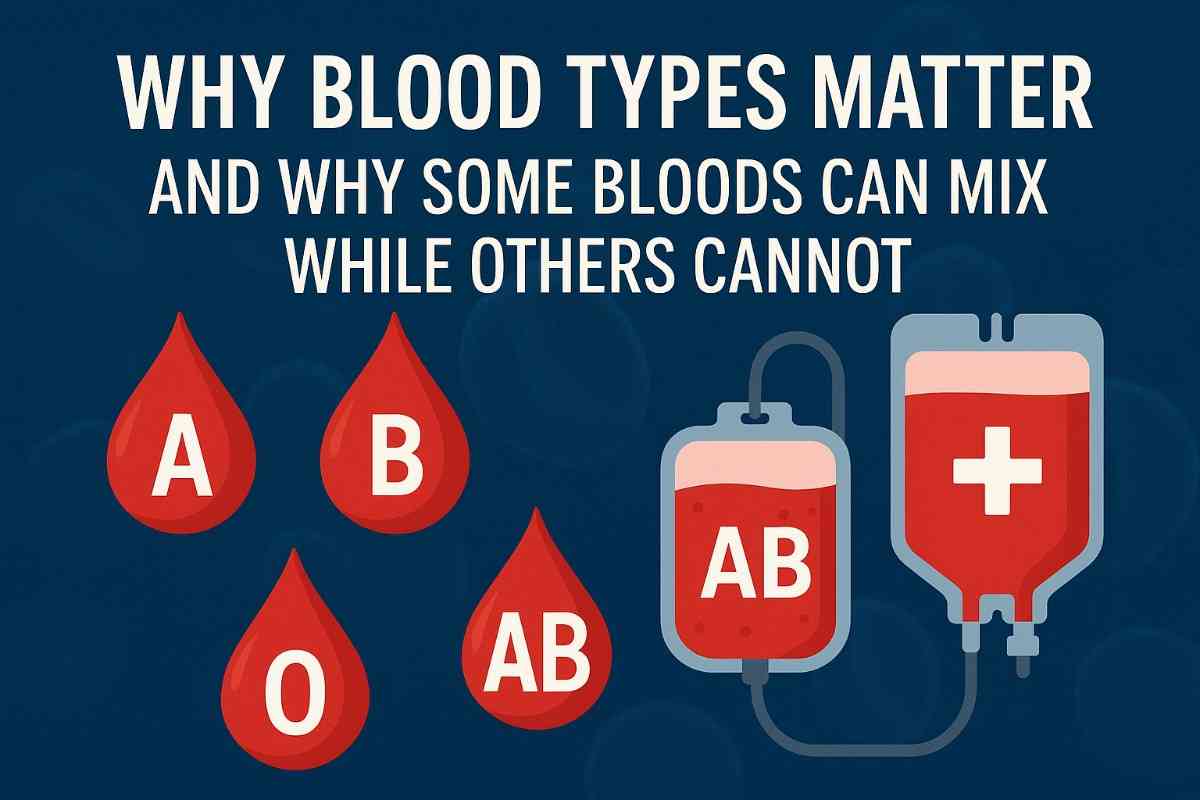
Why do blood types matter and why some bloods can mix while others cannot?
Understanding why blood types matter is crucial because the proteins on red blood cells determine compatibility. Although people often believe that all blood is the same, these antigen differences decide which blood can mix safely and which cannot.
It’s often said that despite humanity’s many conflicts, we all bleed the same blood. It’s a nice thought but not quite accurate. In fact, our blood comes in a few different varieties. Just like the role of antigens, our diet also plays a key role in how the immune system responds – see our article on the top 5 super foods to support immunity.
Our red blood cells contain hemoglobin, a protein that bonds to oxygen and helps transport it through the body. They also have complex proteins on the cell membrane. These proteins, called antigens, help white blood cells detect threats.
Antigens act as markers that help the immune system recognize your own cells and avoid attacking them. The two main antigens, A and B determine your blood type.

But how do we get four blood types from only two antigens?
Well, the antigens are coded for by three different alleles, varieties of a particular gene. The A and B alleles code for their antigens, while the O allele codes for none. Since we inherit one gene from each parent, we end up with two alleles determining blood type. When these happen to be different, one overrides the other depending on their relative dominance. For a deeper look at how our immune system is shaped from within, check out our article on the gut microbiome and immune system.
For blood types, the A and B alleles are both dominant, while O is recessive. So A and A gives you type A blood, while B and B gives you type B. If you inherit one of each, the resulting codominance will produce both A and B antigens, which is type AB. The O allele is recessive, so either of the others will override it when they’re paired, resulting in either type A or type B. But if you happen to inherit two Os, instructions will be expressed that make blood cells without the A or the B antigen.
Because of these interactions knowing both parents’ blood types lets us predict the relative probability of their children’s blood types.
Why do blood types matter?
For blood transmissions, finding the correct one is a matter of life and death. If someone with type A receives type B, their antibodies reject the foreign antigens and attack them, which can cause clotting. People with type AB blood produce both A and B antigens, so they don’t make antibodies against them and can accept both. People with type O blood lack both antigens, making them universal donors, but their immune system rejects all other blood types.
Matching donors and recipients is harder because of extra antigen systems, especially the Rh factor, first found in Rhesus monkeys. Rh+ or Rh- refers to the presence or absence of the D antigen of the Rh blood group system. And in addition to impending some blood transfussions, it can cause severe complications in pregnancy. If an Rh– mother carries an Rh+ child, her body may form antibodies that cross the placenta and attack the fetus, causing hemolytic disease. For authoritative guidance, see the American Red Cross guide to blood types and compatibility.

How Incorrect Blood Matching Causes Dangerous Reactions
Some cultures believe blood type to be associated with personality, though this is not supported by science. Blood type proportions differ across populations, but scientists aren’t sure why, possibly disease protection or random genetic driftwhy they evolved; perhaps as protection against blood born diseases, or due to random genetic drift.
Humans and apes share four main blood types, which seem few compared to the thirteen found in dogs.
What is your blood group? Do tell me in comments 😃
Our Social Accounts


Wow, very informative! My blood group is AB+