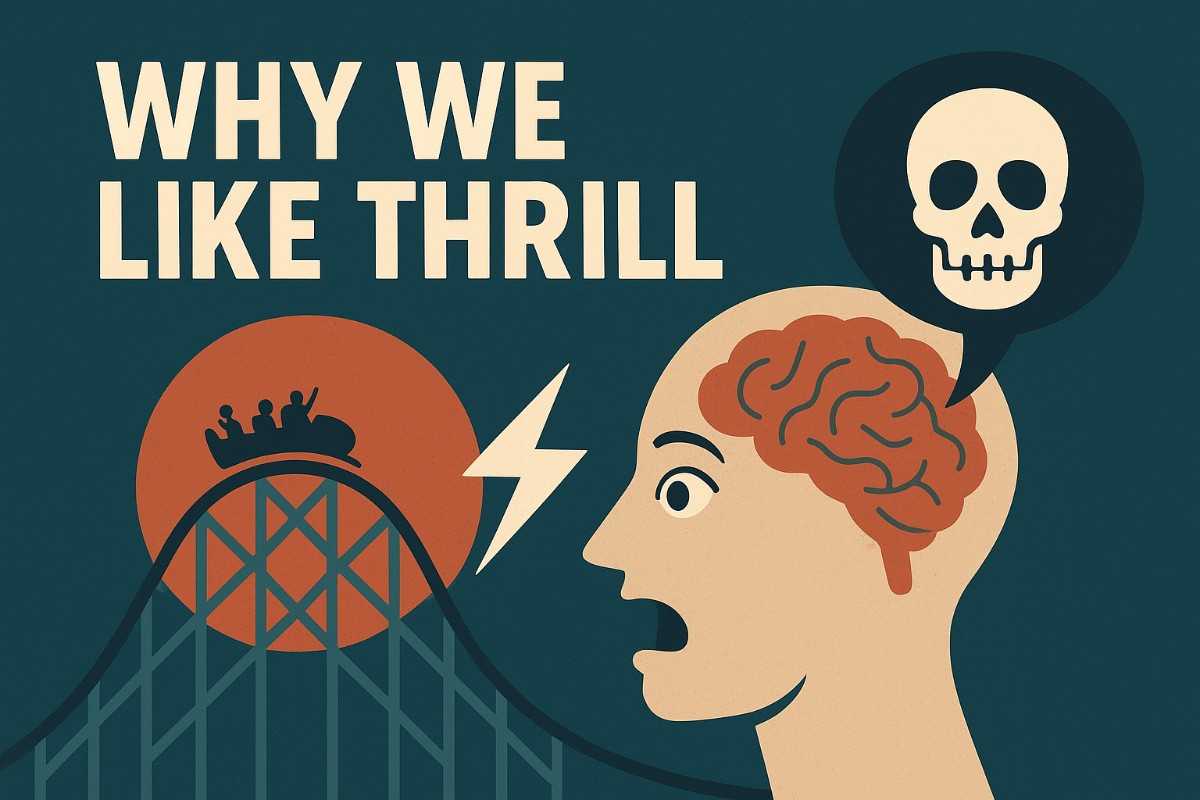
Why do we love to put ourselves in danger situations? Why do we like thrill?
How Fear Creates Excitement in Our Brain
Right now, people are lining up to scare themselves with a thrill ride or a horror movie. In fact, in October of 2015 alone, about 780 million people visited a haunted house in the world. Many people find this behavior strange and ask, ‘What could be fun about being scared?’
Fear has a bad rap, but it’s not all bad. For starters, fear can actually feel pretty good. When a threat hits, our body releases chemicals that prepare us for danger. They boost energy, reduce pain, and temporarily shut down nonessential systems like deep thinking. If you want simple, science-backed ways to handle this surge of fear in real life, you can read my article on how to keep yourself calm under pressure.
Feeling pain-free and energized without worrying sounds great, and it can be because this response is similar, though not exactly the same to what we experience in positive, high-arousal states, like excitement, happiness and even during sex.

When Danger Feels Safe: The Real Reason Thrill Turns Fun
The difference lays in the context. If we’re in real danger, we’re focused on survival, not fun. But in a safe place, this high-arousal response turns into an enjoyable natural high. It’s why people on roller coasters can go from screaming to laughing within moments. Your body is already in a euphoric state. You’re just relabeling the experience.
Why Some People Love Thrill More Than Others
And though the threat response is universal, research shows differences between individuals in how the chemicals associated with the threat response work. This explains why some people are more prone to thrill-seeking than others. Other differences explain why some love dizziness on a loop-de-loop but hate the drop of a steep roller coaster, or why some squeal with delight inside a haunted house, but retreat in terror if taken to an actual cemetery.
How Thrill Boosts Confidence and Self-Esteem
Fear brings more than just a fun, natural high. Doing things that we’re afraid of can give us a nice boost of self-esteem. Like any person challenge, whether it’s running a race or finishing a long book, when we make it through to the end, we feel a sense of accomplishment. If you’re working on building that courage in everyday life, you might also like my guide on how to be confident and build real self-belief.
Why We Keep Seeking Thrill Even When We Know It’s Not Real
This is true even if we know we’re not really in any danger. Our thinking brains may know the zombies aren’t real, but our bodies tell us otherwise. The fear feels real, so when we make it through alive, the satisfaction and sense of accomplishment also feel real. This is a great evolutionary adaptation. People who balanced bravery and caution gained better chances of survival and discovery.

How Shared Thrill Experiences Bring People Closer
Finally, fear brings people together. When you see a friend scream or laugh, you feel pushed to do the same. This is because we make sense of what our friends are experiencing by recreating the experience ourselves.
This not only intensifies our own emotional experience, but makes us feel closer to those we’re with. The feeling of closeness during times of fear is aided by the hormone oxytocin released during fight or flight. Fear is a powerful emotional experience, and anything that triggers a strong reaction is going to be stored in our memory really well. You don’t want to forget what can hurt you. So, if a horror movie with friends leaves you satisfied, you’ll want to repeat the experience.
DO YOU ALSO LIKE THRILL AND ADVENTURE? COMMENT DOWN.
For a deeper look at how our brain turns fear into pleasure, you can check out this Psychology Today article on why we love to be scared.
Our Social Accounts


Hi there! Quick question that’s completely off topic.
Do you know how to make your site mobile friendly? My weblog looks weird when viewing from my iphone.
I’m trying to find a template or plugin that might be able to
correct this problem. If you have any recommendations, please share.
Many thanks!
Id like to thank you for the efforts you have put in penning this blog. Im hoping to view the same high-grade content by you in the future as well. In truth, your creative writing abilities has encouraged me to get my very own site now 😉